
360538

tert-Butanol
ACS reagent, ≥99.0%
Synonym(s):
2-Methyl-2-propanol, tert-Butyl alcohol, Trimethyl carbinol
Sign In to View Organizational & Contract Pricing.
Select a Size
Change View
About This Item
Linear Formula:
(CH3)3COH
CAS Number:
Molecular Weight:
74.12
UNSPSC Code:
12191601
NACRES:
NA.21
PubChem Substance ID:
EC Number:
200-889-7
Beilstein/REAXYS Number:
906698
MDL number:
Assay:
≥99.0%
Grade:
ACS reagent
Vapor pressure:
31 mmHg ( 20 °C), 44 mmHg ( 26 °C)
grade
ACS reagent
Quality Level
vapor density
2.5 (vs air)
vapor pressure
31 mmHg ( 20 °C), 44 mmHg ( 26 °C)
assay
≥99.0%
form
solid or liquid
autoignition temp.
896 °F
expl. lim.
8 %
dilution
(for analytical testing)
impurities
≤0.001 meq/g Titr. acid, ≤0.01% formaldehyde, ≤0.1% water
evapn. residue
≤0.003%
color
APHA: ≤20
pH
7 (20 °C)
density
0.775 g/mL at 25 °C (lit.)
SMILES string
CC(C)(C)O
InChI
1S/C4H10O/c1-4(2,3)5/h5H,1-3H3
InChI key
DKGAVHZHDRPRBM-UHFFFAOYSA-N
General description
tert-Butanol ACS grade solvent meets or exceeds the high standards of the American Chemical Society (ACS). It is ideal for most research needs and delivers replicable, publishable results.
It is used in:
It is used in:
- Routine chemical synthesis
- Drying & purification
- Critical labware cleaning
Our premium ACS solvents are ideal for routine chemical synthesis, drying, purification, and critical labware cleaning. They meet or exceed the rigorous standards of the American Chemical Society (ACS), ensuring high-quality results for your research needs.
Premium ACS Solvents: Our solvents meet or exceed the stringent standards set by the American Chemical Society, ensuring high quality and reliability for your laboratory applications.
Replicable and Publishable Results: Designed for consistency, our solvents deliver results that can be reliably reproduced, making them ideal for research that requires publication.
Versatile Applications: Suitable for routine chemical synthesis, drying, purification, and critical labware cleaning, our solvents cater to a wide range of research needs in the laboratory.
Premium ACS Solvents: Our solvents meet or exceed the stringent standards set by the American Chemical Society, ensuring high quality and reliability for your laboratory applications.
Replicable and Publishable Results: Designed for consistency, our solvents deliver results that can be reliably reproduced, making them ideal for research that requires publication.
Versatile Applications: Suitable for routine chemical synthesis, drying, purification, and critical labware cleaning, our solvents cater to a wide range of research needs in the laboratory.
Application
tert-Butanol can be used as a solvent in the oxidation of 5-hydroxymethylfurfural to 2,5-furandicarboxylic acid using Cu-MnO2 as a catalyst and tert-butyl hydroperoxide (TBHP) as an oxidant. Mixture of tert-butanol and methanol solvent system is used in the synthesis of glycerol dioleates (GDO) via lipase-catalyzed esterification of glycerol with oleic acid.
Still not finding the right product?
Explore all of our products under tert-Butanol
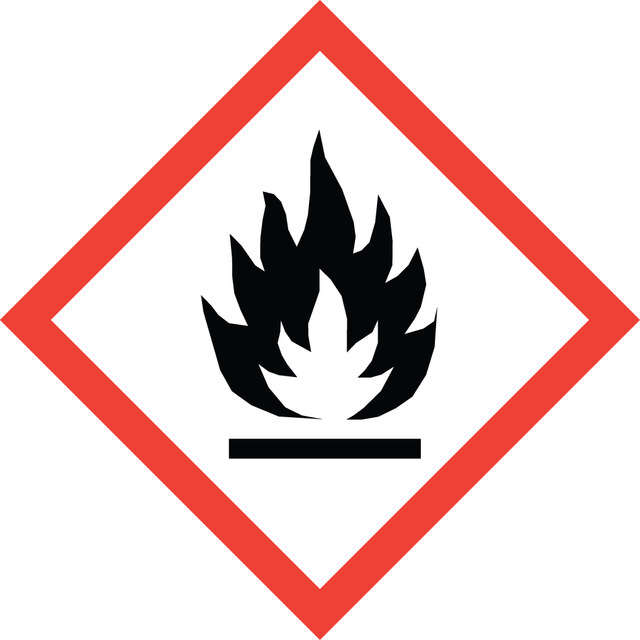

signalword
Danger
hcodes
Hazard Classifications
Acute Tox. 4 Inhalation - Eye Irrit. 2 - Flam. Liq. 2 - STOT SE 3
target_organs
Central nervous system, Respiratory system
Storage Class
3 - Flammable liquids
wgk
WGK 1
flash_point_f
59.0 °F - closed cup
flash_point_c
15 °C - closed cup
Regulatory Information
危险化学品
This item has
Choose from one of the most recent versions:
Already Own This Product?
Find documentation for the products that you have recently purchased in the Document Library.
Lijun Wang et al.
Bone research, 9(1), 6-6 (2021-01-28)
The maturation and function of osteoblasts (OBs) rely heavily on the reversible phosphorylation of signaling proteins. To date, most of the work in OBs has focused on phosphorylation by tyrosyl kinases, but little has been revealed about dephosphorylation by protein
Matteo Bolomini-Vittori et al.
Scientific reports, 9(1), 3556-3556 (2019-03-07)
Local membrane phospholipid enrichment serves as docking platform for signaling proteins involved in many processes including cell adhesion and migration. Tissue-resident dendritic cells (DCs) assemble actomyosin-based structures called podosomes, which mediate adhesion and degradation of extracellular matrix for migration and
Arnau Bassegoda et al.
Applied microbiology and biotechnology, 97(19), 8559-8568 (2013-01-22)
Rhodococci are highly adaptable bacteria, capable to degrade or transform a large number of organic compounds, including recalcitrant or toxic products. However, little information is available on the lipases of the genus Rhodococcus, except for LipR, the first lipase isolated
Global Trade Item Number
| SKU | GTIN |
|---|---|
| 360538-18L-CS | 04061831818192 |
| 360538-500ML | 04061831823714 |
| 360538-1L | 04061831818277 |
| 360538-20L | 04061831823684 |
| 360538-2L | 04061831823691 |
| 360538-4L | 04061837566134 |
| 360538-4X4L | 04061831823707 |