
655104

Sodium hydroxide
reagent grade, 97%, powder
Synonym(s):
Caustic soda
Sign In to View Organizational & Contract Pricing.
Select a Size
Change View
About This Item
Linear Formula:
NaOH
CAS Number:
Molecular Weight:
40.00
NACRES:
NA.21
PubChem Substance ID:
UNSPSC Code:
12352302
EC Number:
215-185-5
MDL number:
Assay:
97%
Form:
powder
Grade:
reagent grade
grade
reagent grade
Quality Level
vapor density
>1 (vs air)
vapor pressure
<18 mmHg ( 20 °C), 3 mmHg ( 37 °C)
assay
97%
form
powder
technique(s)
cell culture | mammalian: suitable
mp
318 °C (lit.)
solubility
water: soluble 1260 g/L at 20 °C
density
2.13 g/cm3 at 20 °C
SMILES string
[OH-].[Na+]
InChI
1S/Na.H2O/h;1H2/q+1;/p-1
InChI key
HEMHJVSKTPXQMS-UHFFFAOYSA-M
General description
Sodium hydroxide, also known as lye and caustic soda, is a strong base used universally as a neutralization agent in the chemical industry, paper making, petroleum refining, cleaning compounds, and drain cleaners.
Application
Sodium hydroxide can be used as:
- A reagent in the gold-catalyzed selective oxidation of glycerol to glyceric acid.
- A catalyst for the cross-dehydrogenative coupling of alcohols and hydrosilanes to synthesize silyl ethers.
- A base in the Sonogashira-type coupling of aryl halides and alkynes to synthesize ynones.
Still not finding the right product?
Explore all of our products under Sodium hydroxide
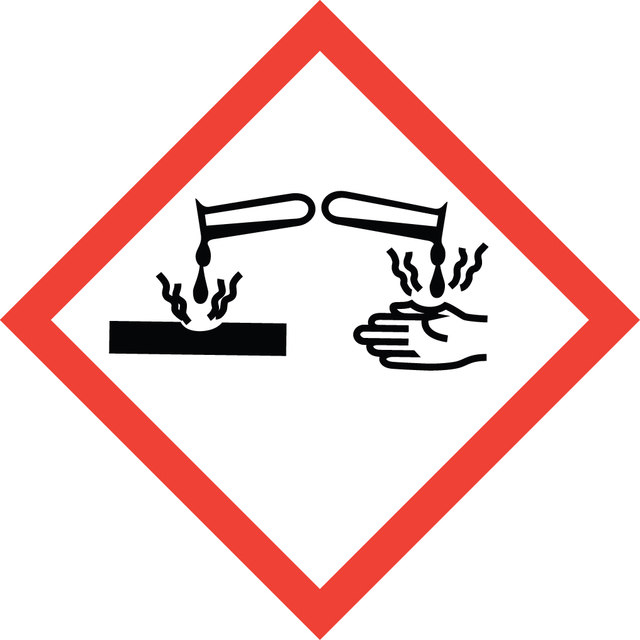
signalword
Danger
hcodes
Hazard Classifications
Eye Dam. 1 - Met. Corr. 1 - Skin Corr. 1A
wgk
WGK 1
flash_point_f
Not applicable
flash_point_c
Not applicable
Storage Class
8B - Non-combustible corrosive hazardous materials
Regulatory Information
危险化学品
This item has
Choose from one of the most recent versions:
Already Own This Product?
Find documentation for the products that you have recently purchased in the Document Library.
Jesper Hjortnaes et al.
Advanced healthcare materials, 4(1), 121-130 (2014-06-25)
Three dimensional (3D) hydrogel platforms are powerful tools, providing controllable, physiologically relevant microenvironments that could aid in understanding how various environmental factors direct valvular interstitial cell (VIC) phenotype. Continuous activation of VICs and their transformation from quiescent fibroblast to activated
Richard J Travers et al.
Blood, 124(22), 3183-3190 (2014-09-10)
Polyphosphate (polyP) is secreted by activated platelets and has been shown to contribute to thrombosis, suggesting that it could be a novel antithrombotic target. Previously reported polyP inhibitors based on polycationic substances, such as polyethylenimine, polyamidoamine dendrimers, and polymyxin B
Valdeir Arantes et al.
Biotechnology for biofuels, 7, 87-87 (2014-07-01)
There is still considerable debate regarding the actual mechanism by which a "cellulase mixture" deconstructs cellulosic materials, with accessibility to the substrate at the microscopic level being one of the major restrictions that limits fast, complete cellulose hydrolysis. In the
Global Trade Item Number
| SKU | GTIN |
|---|---|
| 655104-25G | 04061832733074 |
| 655104-2.5KG | 04061832733067 |
| 655104-500G | 04061832733081 |