Sign In to View Organizational & Contract Pricing.
Select a Size
Change View
About This Item
Empirical Formula (Hill Notation):
C5H5N
CAS Number:
Molecular Weight:
79.10
EC Number:
203-809-9
UNSPSC Code:
12352005
PubChem Substance ID:
Beilstein/REAXYS Number:
103233
MDL number:
Assay:
≥99.0%
Grade:
ACS reagent
Bp:
115 °C (lit.)
Vapor pressure:
10 mmHg ( 13.2 °C), 20 mmHg ( 25 °C)
grade
ACS reagent
Quality Level
vapor density
2.72 (vs air)
vapor pressure
10 mmHg ( 13.2 °C), 20 mmHg ( 25 °C)
assay
≥99.0%
form
liquid
autoignition temp.
899 °F
expl. lim.
12.4 %
dilution
(for analytical testing)
impurities
≤0.002% NH3, 0.1% water
evapn. residue
≤0.002%
refractive index
n20/D 1.509 (lit.)
pH
8.5 (25 °C, 15.82 g/L)
bp
115 °C (lit.)
mp
−42 °C (lit.)
solubility
water: soluble
density
0.978 g/mL at 25 °C (lit.)
anion traces
chloride (Cl-): ≤0.001%, sulfate (SO42-): ≤0.001%
cation traces
Cu: ≤5 ppm
SMILES string
C1=CN=CC=C1
InChI
1S/C5H5N/c1-2-4-6-5-3-1/h1-5H
InChI key
JUJWROOIHBZHMG-UHFFFAOYSA-N
General description
Pyridine (Pyr) is a nitrogen containing six membered heterocyclic compound commonly used as a base. It is a colorless liquid with a fishy odor. Pyridine moiety is present as a major component in a number of compounds like pyridine nucleotides, pyridine alkaloids, pyridine-based polymers and pyridine-containing macrocycles. It has wide application as a solvent, catalyst and as an intermediate for synthesis. IR, Raman and UV spectra of pyridine have been analyzed and the values obtained were used to calculate its thermodynamic properties. Photodegradation and bacterial degradation of Pyr has been studied.
Our premium ACS solvents are ideal for routine chemical synthesis, drying, purification, and critical labware cleaning. They meet or exceed the rigorous standards of the American Chemical Society (ACS), ensuring high-quality results for your research needs.
Premium ACS Solvents: Our solvents meet or exceed the stringent standards set by the American Chemical Society, ensuring high quality and reliability for your laboratory applications.
Replicable and Publishable Results: Designed for consistency, our solvents deliver results that can be reliably reproduced, making them ideal for research that requires publication.
Versatile Applications: Suitable for routine chemical synthesis, drying, purification, and critical labware cleaning, our solvents cater to a wide range of research needs in the laboratory.
Premium ACS Solvents: Our solvents meet or exceed the stringent standards set by the American Chemical Society, ensuring high quality and reliability for your laboratory applications.
Replicable and Publishable Results: Designed for consistency, our solvents deliver results that can be reliably reproduced, making them ideal for research that requires publication.
Versatile Applications: Suitable for routine chemical synthesis, drying, purification, and critical labware cleaning, our solvents cater to a wide range of research needs in the laboratory.
Application
Pyridine may be used in the synthesis of the following:
- complexes with cobalt(II) halides
- pyridine-d 5, a deuterated form of pyridine
- ionic liquid matrices (ILMs)
Still not finding the right product?
Explore all of our products under Pyridine
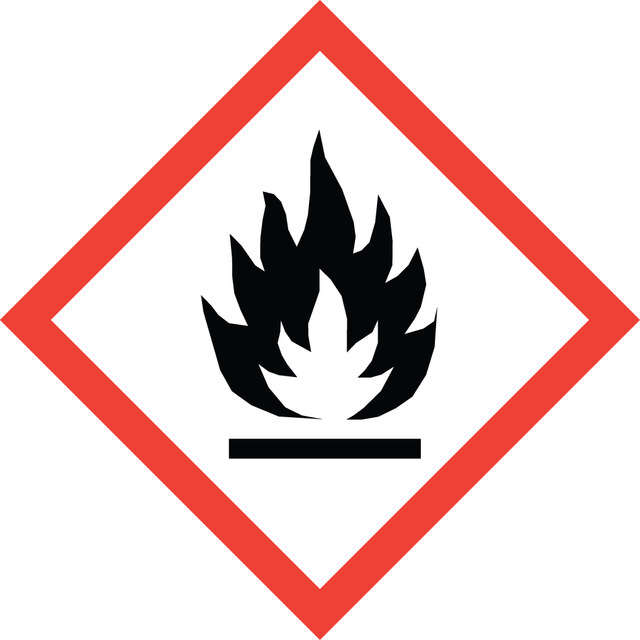
signalword
Danger
Hazard Classifications
Acute Tox. 4 Dermal - Acute Tox. 4 Inhalation - Acute Tox. 4 Oral - Eye Irrit. 2 - Flam. Liq. 2 - Skin Irrit. 2
Storage Class
3 - Flammable liquids
wgk
WGK 2
flash_point_f
68.0 °F - closed cup
flash_point_c
20 °C - closed cup
Regulatory Information
危险化学品
This item has
Choose from one of the most recent versions:
Already Own This Product?
Find documentation for the products that you have recently purchased in the Document Library.
The vibrational spectrum of pyridine and the thermodynamic properties of pyridine vapors.
Kline Jr CH and Turkevich J.
J. Chem. Phys., 12(7), 300-309 (1944)
The thermal decomposition of metal complexes-III: The decomposition of some pyridine and substituted-pyridine complexes of cobalt (II) halides.
Allan JR, et al.
J. Inorg. Nucl. Chem., 26(11), 1895-1902 (1964)
Bacterial degradation of pyridine, indole, quinoline, and their derivatives under different redox conditions.
Fetzner, S.
Applied Microbiology and Biotechnology, 49(3), 237-250 (1998)
Global Trade Item Number
| SKU | GTIN |
|---|---|
| 676772-4X4L | 04061837567315 |