Skip to Content
Merck
CN

695076

Formic acid

greener alternative

ACS reagent, ≥96%

Sign In to View Organizational & Contract Pricing.

Select a Size

Change View

About This Item

Linear Formula:
HCOOH
CAS Number:
Molecular Weight:
46.03
UNSPSC Code:
12352106
NACRES:
NA.21
PubChem Substance ID:
EC Number:
200-579-1
Beilstein/REAXYS Number:
1209246
MDL number:
Assay:
≥96%
Concentration:
≥96.0%
Form:
liquid
Grade:
ACS reagent
Technical Service
Need help? Our team of experienced scientists is here for you.
Let Us Assist


grade

ACS reagent

Quality Level

vapor density

1.6 (vs air)

vapor pressure

44.8 mmHg ( 20 °C)

assay

≥96%

form

liquid

autoignition temp.

1004 °F

expl. lim.

57 %

greener alternative product characteristics

Catalysis
Learn more about the Principles of Green Chemistry.

sustainability

Greener Alternative Product

concentration

≥96.0%

refractive index

n20/D 1.370 (lit.)

pH

2.2 (20 °C, 2.2 g/L)

bp

100-101 °C (lit.)

mp

8.2-8.4 °C (lit.)

solubility

water: miscible

density

1.22 g/mL at 25 °C (lit.)

anion traces

chloride (Cl-): ≤0.001%, sulfate (SO42-): ≤0.003%, sulfite (SO32-): passes test

cation traces

Fe: ≤0.001%, NH4+: ≤0.005%, heavy metals (as Pb): ≤0.001%

application(s)

sample preparation

greener alternative category

SMILES string

OC=O

InChI

1S/CH2O2/c2-1-3/h1H,(H,2,3)

InChI key

BDAGIHXWWSANSR-UHFFFAOYSA-N

General description

Formic acid is a simple carboxylic acid produced by the hydrolysis of methyl formate or formamide or from its salts. It is primarily used in dyeing, textile, leather, rubber, chemical, and pharmaceutical industries.
We are committed to bringing you Greener Alternative Products, which adhere to one or more of The 12 Principles of Greener Chemistry. This product has been enhanced for catalysis. Click here for more information.

Application

Formic acid can be used as a reagent in the:
  • Co-Nx-catalyzed one-pot reductive amination of carbonyl compounds with nitro compounds to synthesize secondary amines.
  • Photoreduction of polycyclic and heterocyclic nitro arenes to corresponding amines.
  • Pd-catalyzed chemoselective hydrogenation of olefins to saturated hydrocarbons.


Still not finding the right product?

Explore all of our products under Formic acid


signalword

Danger

Hazard Classifications

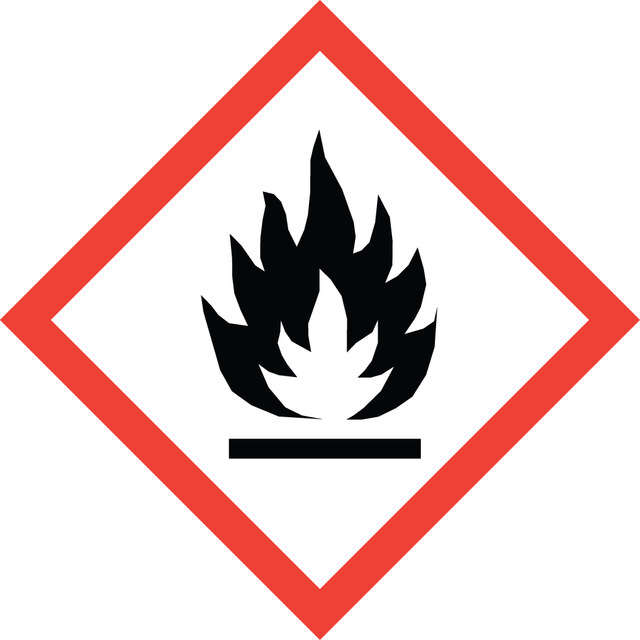
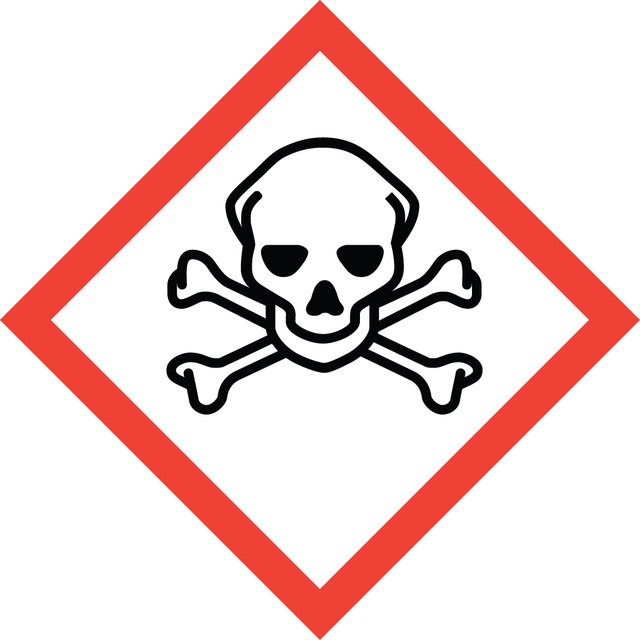
Acute Tox. 3 Inhalation - Acute Tox. 4 Oral - Eye Dam. 1 - Flam. Liq. 3 - Skin Corr. 1A

supp_hazards

Storage Class

3 - Flammable liquids

flash_point_f

121.1 °F - closed cup

flash_point_c

49.5 °C - closed cup

Regulatory Information

危险化学品

This item has


Choose from one of the most recent versions:

Certificates of Analysis (COA)

Lot/Batch Number

Don't see the Right Version?

If you require a particular version, you can look up a specific certificate by the Lot or Batch number.

Already Own This Product?

Find documentation for the products that you have recently purchased in the Document Library.

Visit the Document Library


Articles

Rapid trypsin digest kit yields reliable results in less than 2 hours for mass spectrometry analysis.

Using an Ascentis® Express F5 HPLC column, this study separates 11 β-agonists in pork by LC-MS/MS in under 8 minutes with excellent recovery and precision.


The crystal structure of formic acid.
Holtzberg F, et al.
Acta Crystallographica, 6(2), 127-130 (1953)
Sarela García-Santamarina et al.
Nature protocols, 9(5), 1131-1145 (2014-04-20)
Reversible thiol oxidation of cysteine residues occurs in many intracellular catalytic and signaling processes. Here we describe an optimized protocol, which can be completed in ∼5 d, to unambiguously identify specific cysteine residues that are transiently and reversibly oxidized by
Photodissociation of formic acid.
Su H, et al.
J. Chem. Phys., 113(5), 1891-1897 (2000)


Global Trade Item Number

SKUGTIN
695076-100ML04061832779140
695076-500ML04061832779287