
C1297

Copper(II) sulfate
ReagentPlus®, ≥99%
Synonym(s):
Cupric sulfate
Sign In to View Organizational & Contract Pricing.
Select a Size
Change View
About This Item
Linear Formula:
CuSO4
CAS Number:
Molecular Weight:
159.61
NACRES:
NA.21
PubChem Substance ID:
UNSPSC Code:
12352302
EC Number:
231-847-6
MDL number:
Assay:
≥99%
Form:
powder
vapor pressure
7.3 mmHg ( 25 °C)
Quality Level
product line
ReagentPlus®
assay
≥99%
form
powder
reaction suitability
reaction type: click chemistry
pH
3.5-4.5 (20 °C, 50 g/L)
mp
200 °C (dec.) (lit.)
density
3.603 g/mL at 25 °C (lit.)
storage temp.
room temp
SMILES string
[Cu++].[O-]S([O-])(=O)=O
InChI
1S/Cu.H2O4S/c;1-5(2,3)4/h;(H2,1,2,3,4)/q+2;/p-2
InChI key
ARUVKPQLZAKDPS-UHFFFAOYSA-L
General description
Copper(II)sulfate is a Lewis acid catalyst commonly used to promote acid-catalyzed organic transformations.
Application
Copper(II)sulfate can be used as a catalyst for the:
- Alcoholysis of wheat straw into methyl levulinate.
- Selective oxidation of amines to imines in the presence of hydrogen peroxide as an oxidant.
- Synthesis of 1,2,3-triazoles via Click reactions of azides and alkynes.
- Microwave-assisted Huisgen-type cycloaddition to synthesize modified poly(N-vinylpyrrolidone).
Legal Information
ReagentPlus is a registered trademark of Merck KGaA, Darmstadt, Germany
Still not finding the right product?
Explore all of our products under Copper(II) sulfate
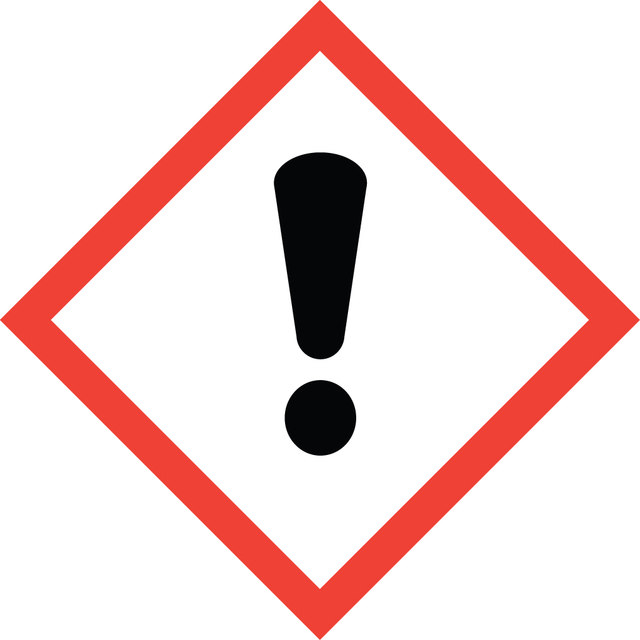
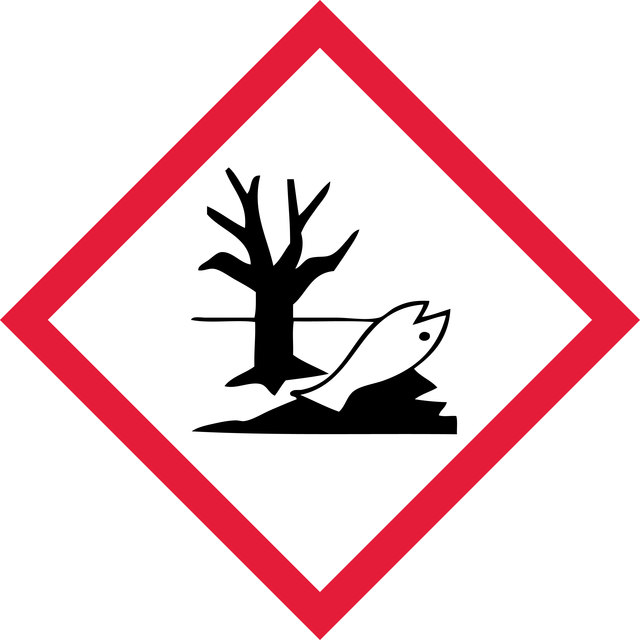
signalword
Warning
hcodes
Hazard Classifications
Acute Tox. 4 Oral - Aquatic Acute 1 - Aquatic Chronic 1 - Eye Irrit. 2 - Skin Irrit. 2
Storage Class
11 - Combustible Solids
flash_point_f
Not applicable
flash_point_c
Not applicable
Choose from one of the most recent versions:
Already Own This Product?
Find documentation for the products that you have recently purchased in the Document Library.
Related Content
Product Information Sheet
Hongyan Yang et al.
Antibiotics (Basel, Switzerland), 9(11) (2020-11-01)
Antimicrobial resistance is currently an important concern, but there are few data on the co-presence of metal and antibiotic resistance in potentially pathogenic Escherichia coli entering the food chain from pork, which may threaten human health. We have examined the
Marlize Z Bekker et al.
Journal of agricultural and food chemistry, 66(51), 13483-13491 (2018-12-13)
Diorganopolysulfanes can be generated when hydrogen sulfide (H2S) and thiols are oxidized in the presence of Cu(II) under conditions usually aimed at removing H2S from wine. This work sought to understand if polysulfanes could act as latent sources of H2S
Sofia Abassi et al.
Environmental toxicology, 34(9), 1013-1024 (2019-05-17)
The freshwater green algae Closterium ehrenbergii has been considered as a model for eco-toxicological assessment in aquatic systems. Heat shock proteins (HSPs) are a class of highly conserved proteins produced in all living organisms, which participate in environmental stress responses.
Global Trade Item Number
| SKU | GTIN |
|---|---|
| C1297-500G | 04061835278787 |
| C1297-100G | 04061835278770 |