
E12508

Ethylbenzene
ReagentPlus®, 99%
Synonym(s):
NSC 406903, Phenylethane
Sign In to View Organizational & Contract Pricing.
Select a Size
Change View
About This Item
Linear Formula:
C6H5C2H5
CAS Number:
Molecular Weight:
106.17
NACRES:
NA.21
PubChem Substance ID:
eCl@ss:
39011201
UNSPSC Code:
12352002
EC Number:
202-849-4
MDL number:
Beilstein/REAXYS Number:
1901871
Assay:
99%
Bp:
136 °C (lit.)
Vapor pressure:
10 mmHg ( 20 °C), 19 mmHg ( 37.7 °C)
vapor density
3.7 (vs air)
Quality Level
vapor pressure
10 mmHg ( 20 °C), 19 mmHg ( 37.7 °C)
product line
ReagentPlus®
assay
99%
form
liquid
autoignition temp.
810 °F
expl. lim.
6.7 %
dilution
(for general lab use)
refractive index
n20/D 1.495 (lit.)
bp
136 °C (lit.)
mp
−95 °C (lit.)
density
0.867 g/mL at 25 °C (lit.)
SMILES string
CCc1ccccc1
InChI
1S/C8H10/c1-2-8-6-4-3-5-7-8/h3-7H,2H2,1H3
InChI key
YNQLUTRBYVCPMQ-UHFFFAOYSA-N
General description
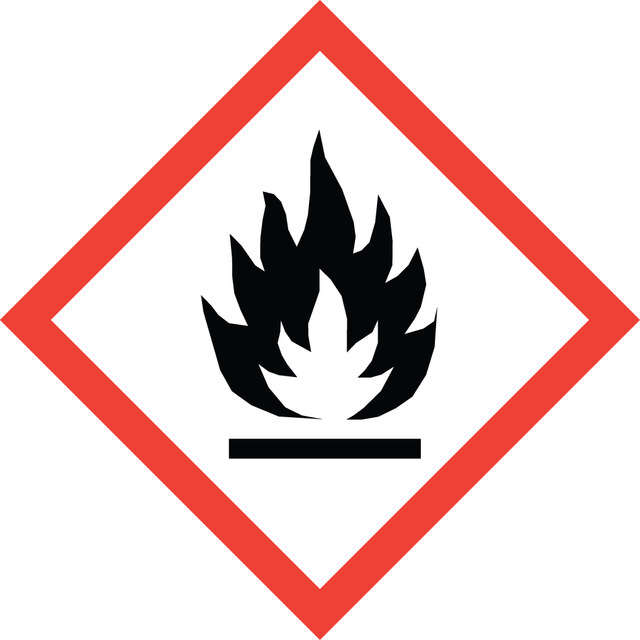
Ethylbenzeneis a clear liquid with a noticeable aromatic fragrance. It is flammable and easily blends with alcohol and ether, although it has a low solubility in water. It is commonly used as a solvent and vital in the production of styrene and synthetic polymers, which are employed in the manufacturing of plastics and rubber items.
Application
Ethylbenzenecan be used as a solvent to synthesis Pseudo-Peptides or N,N-disubstituted thiomalonamides with retro thioamide bond.
Legal Information
ReagentPlus is a registered trademark of Merck KGaA, Darmstadt, Germany
Still not finding the right product?
Explore all of our products under Ethylbenzene


signalword
Danger
hcodes
Hazard Classifications
Acute Tox. 4 Inhalation - Aquatic Chronic 3 - Asp. Tox. 1 - Flam. Liq. 2 - STOT RE 2
target_organs
hearing organs
Storage Class
3 - Flammable liquids
wgk
WGK 1
flash_point_f
71.6 °F - closed cup
flash_point_c
22.0 °C - closed cup
Regulatory Information
危险化学品
This item has
Choose from one of the most recent versions:
Already Own This Product?
Find documentation for the products that you have recently purchased in the Document Library.
Enza Palma et al.
New biotechnology, 53, 41-48 (2019-07-01)
Microbial electrochemical technologies (MET) are increasingly being considered for in situ remediation of contaminated groundwater. However, their application potential for the simultaneous treatment of complex mixtures of organic and inorganic contaminants, has been only marginally explored. Here we have analyzed
Carla G A da Silva et al.
Journal of chromatography. A, 1260, 81-87 (2012-09-12)
Endcapped stationary phases were prepared after thermal immobilization of poly(methyloctadecylsiloxane) (PMODS) onto zirconized and titanized silica supports. These new stationary phases have lower densities of residual hydroxyl groups, according to infrared spectroscopy and 29Si CP-MAS NMR and as shown by
W Tang et al.
Toxicology, 144(1-3), 39-50 (2000-04-27)
In the present studies, human exposure to styrene and to ethylbenzene (EB) is assessed on the basis of literature data. Total styrene and total EB exposure result from inhalation and from food intake. Styrene and EB inhaled represent the greatest
Global Trade Item Number
| SKU | GTIN |
|---|---|
| E12508-1L | 04061833601501 |
| E12508-2.5L | 04061833601518 |
| E12508-20L | 04061833601525 |