
M32658

3-Methyl-1-butanol
reagent grade, 98%
Synonym(s):
Isoamyl alcohol, Isopentyl alcohol
Sign In to View Organizational & Contract Pricing.
Select a Size
Change View
About This Item
Linear Formula:
(CH3)2CHCH2CH2OH
CAS Number:
Molecular Weight:
88.15
UNSPSC Code:
12352001
NACRES:
NA.21
PubChem Substance ID:
EC Number:
204-633-5
Beilstein/REAXYS Number:
1718835
MDL number:
Assay:
98%
Grade:
reagent grade
Bp:
130 °C (lit.)
Vapor pressure:
2 mmHg ( 20 °C)
grade
reagent grade
Quality Level
vapor density
3 (vs air)
vapor pressure
2 mmHg ( 20 °C)
assay
98%
form
liquid
autoignition temp.
644 °F
expl. lim.
1.2-9 %, 100 °F
dilution
(for analytical testing)
refractive index
n20/D 1.406 (lit.)
pH
5.6 (20 °C, 25 g/L)
bp
130 °C (lit.)
mp
−117 °C (lit.)
density
0.809 g/mL at 25 °C (lit.)
SMILES string
CC(C)CCO
InChI
1S/C5H12O/c1-5(2)3-4-6/h5-6H,3-4H2,1-2H3
InChI key
PHTQWCKDNZKARW-UHFFFAOYSA-N
Application
3-Methyl-1-butanol has been used in the preparation of bioactive beads (BABs) with uniform size for transformation.
Biochem/physiol Actions
3-Methyl-1-butanol is a pentanol isomer useful in biofuels. It is used as a starting material for the production of isoamyl acetate, a flavoring agent applicable in the food industry. 3-Methyl-1-butanol shows anti-fungal action by inhibiting the hyphal formation and reducing biofilm formation in Candida albicans. It is also used in DNA extraction protocols.
Still not finding the right product?
Explore all of our products under 3-Methyl-1-butanol
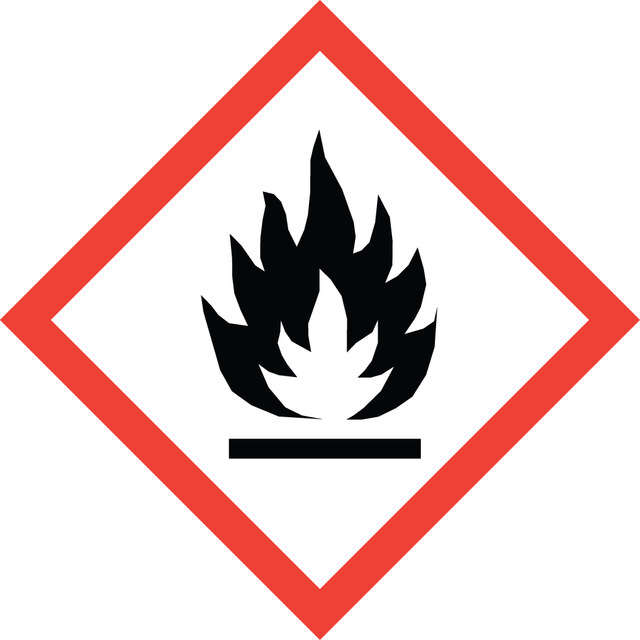


signalword
Danger
hcodes
Hazard Classifications
Acute Tox. 4 Inhalation - Eye Dam. 1 - Flam. Liq. 3 - Skin Irrit. 2 - STOT SE 3
target_organs
Respiratory system
Storage Class
3 - Flammable liquids
wgk
WGK 1
flash_point_f
110.3 °F - closed cup
flash_point_c
43.5 °C - closed cup
Regulatory Information
危险化学品
This item has
Choose from one of the most recent versions:
Already Own This Product?
Find documentation for the products that you have recently purchased in the Document Library.
Vicente Pérez-Brocal et al.
Scientific reports, 10(1), 17377-17377 (2020-10-17)
Human lungs harbor a scarce microbial community, requiring to develop methods to enhance the recovery of nucleic acids from bacteria and fungi, leading to a more efficient analysis of the lung tissue microbiota. Here we describe five extraction protocols including
Mary J Dunlop et al.
Molecular systems biology, 7, 487-487 (2011-05-11)
Many compounds being considered as candidates for advanced biofuels are toxic to microorganisms. This introduces an undesirable trade-off when engineering metabolic pathways for biofuel production because the engineered microbes must balance production against survival. Cellular export systems, such as efflux
Kazushi Yoshida et al.
Nature communications, 3, 739-739 (2012-03-15)
The same odorant can induce attractive or repulsive responses depending on its concentration in various animals including humans. However, little is understood about the neuronal basis of this behavioural phenomenon. Here we show that Caenorhabditis elegans avoids high concentrations of
Global Trade Item Number
| SKU | GTIN |
|---|---|
| M32658-1L | 04061834050032 |
| M32658-100ML | 04061834050025 |
| M32658-4L | 04061837230127 |
| M32658-500ML | 04061834050049 |