
T63002

2,2,2-Trifluoroethanol
ReagentPlus®, ≥99%
Synonym(s):
Trifluoroethyl alcohol
Sign In to View Organizational & Contract Pricing.
Select a Size
Change View
About This Item
Linear Formula:
CF3CH2OH
CAS Number:
Molecular Weight:
100.04
UNSPSC Code:
12191601
NACRES:
NA.21
PubChem Substance ID:
EC Number:
200-913-6
Beilstein/REAXYS Number:
1733203
MDL number:
Assay:
≥99%
Bp:
77-80 °C (lit.)
Vapor pressure:
70 mmHg ( 25 °C)
vapor density
3.5 (vs air)
Quality Level
vapor pressure
70 mmHg ( 25 °C)
product line
ReagentPlus®
assay
≥99%
form
liquid
autoignition temp.
~896 °F
expl. lim.
42 %
dilution
(for general lab use)
refractive index
n20/D 1.3 (lit.)
pH
7
bp
77-80 °C (lit.)
mp
−44 °C (lit.)
density
1.373 g/mL at 25 °C (lit.)
SMILES string
OCC(F)(F)F
InChI
1S/C2H3F3O/c3-2(4,5)1-6/h6H,1H2
InChI key
RHQDFWAXVIIEBN-UHFFFAOYSA-N
General description
2,2,2-Trifluoroethanol (TFE) is an organic compound with the chemical formula CF3CH2OH. TFE is a commonly used solvent in organic synthesis. It can also be used as a cosolvent in the experimental study of proteins and peptides.
Application
2,2,2-Trifluoroethanol can be used as a solvent:
- In the synthesis of 2-amino-3-cyano-4H-chromene and tetrahydrobenzo[b]pyran derivatives by catalyst free one-pot condensation of aldehydes, malononitrile and resorcinol or dimedone.
- In the N-formylation of amines with formic acid in the presence of heterogeneous ZIF-8 (zeolitic imidazolate framework) catalyst.
- In the preparation of 2-substituted-2,3-dihydro-4(1H)-quinazolinone derivatives by condensation of anthranilamide with alkyl, aryl, or heteroaryl ketones or aldehydes.
- In the mild and selective oxidation of sulfur compounds using H2O2(hydrogen peroxide).
Features and Benefits
2,2,2-Trifluoroethanol is more acidic than ethanol due to the presence of electronegative trifluoromethyl group.
Legal Information
ReagentPlus is a registered trademark of Merck KGaA, Darmstadt, Germany
Still not finding the right product?
Explore all of our products under 2,2,2-Trifluoroethanol
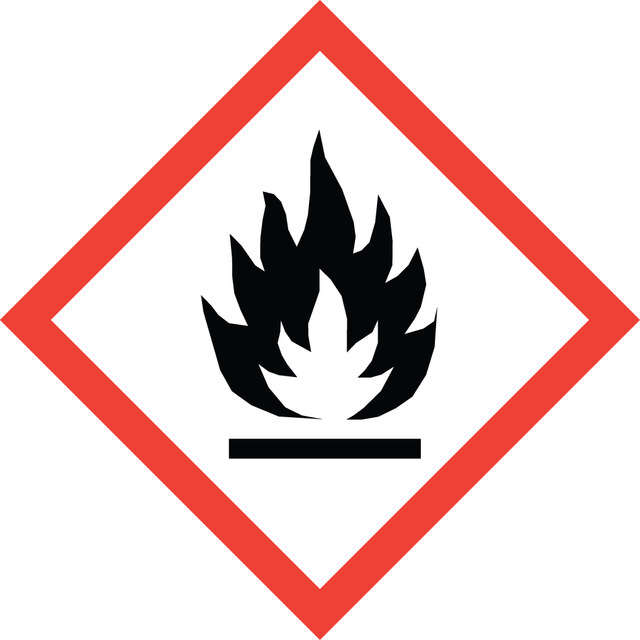



signalword
Danger
Hazard Classifications
Acute Tox. 3 Inhalation - Acute Tox. 3 Oral - Eye Dam. 1 - Flam. Liq. 3 - Repr. 1B - STOT RE 2 Inhalation
target_organs
Blood
Storage Class
3 - Flammable liquids
wgk
WGK 1
flash_point_f
86.0 °F - closed cup
flash_point_c
30 °C - closed cup
Regulatory Information
危险化学品
This item has
Choose from one of the most recent versions:
Already Own This Product?
Find documentation for the products that you have recently purchased in the Document Library.
A facile parallel synthesis of trifluoroethyl-substituted alkynes.
Cui-Bo Liu et al.
Angewandte Chemie (International ed. in English), 51(25), 6227-6230 (2012-05-09)
Bei Feng et al.
Biomacromolecules, 13(12), 3917-3925 (2012-11-08)
In tissue engineering research, there has recently been considerable interest in using electrospun biomimetic nanofibers of hybrids, in particular, from natural and synthetic polymers for engineering different tissues. However, phase separation between a pair of much dissimilar polymers might give
Hannah A Strobel et al.
Tissue engineering. Part A, 24(19-20), 1492-1503 (2018-05-05)
Tissue-engineered human blood vessels may enable in vitro disease modeling and drug screening to accelerate advances in vascular medicine. Existing methods for tissue-engineered blood vessel (TEBV) fabrication create homogenous tubes not conducive to modeling the focal pathologies characteristic of certain
Global Trade Item Number
| SKU | GTIN |
|---|---|
| T63002-100G | 04061837365676 |
| T63002-25G | 04061837366000 |
| T63002-500G | 04061837366482 |