Skip to Content
Merck
CN

72779

Triclosan

97.0-103.0% (active substance, GC)

Synonym(s):

Triclosan, 5-Chloro-2-(2,4-dichlorophenoxy)phenol, Irgasan

Sign In to View Organizational & Contract Pricing.

Select a Size

Change View

About This Item

Empirical Formula (Hill Notation):
C12H7Cl3O2
CAS Number:
Molecular Weight:
289.54
UNSPSC Code:
12352132
NACRES:
NA.85
PubChem Substance ID:
EC Number:
222-182-2
Beilstein/REAXYS Number:
2057142
MDL number:
Technical Service
Need help? Our team of experienced scientists is here for you.
Let Us Assist


biological source

synthetic

Quality Level

assay

97.0-103.0% (active substance, GC)

form

powder or crystals

impurities

≤0.1% Water (Karl Fischer)

color

white

mp

55-59 °C

solubility

1 M NaOH: 5% at 25 °C, faintly turbid to clear (colorless solution)

antibiotic activity spectrum

fungi

mode of action

enzyme | inhibits

SMILES string

Oc1cc(Cl)ccc1Oc2ccc(Cl)cc2Cl

InChI

1S/C12H7Cl3O2/c13-7-1-3-11(9(15)5-7)17-12-4-2-8(14)6-10(12)16/h1-6,16H

InChI key

XEFQLINVKFYRCS-UHFFFAOYSA-N

General description

Chemical structure: diphenyl ether derivative

Application

A component of cefsulodin-irgasan-novobiocin selection medium for Yersinia, a human pathogen that may contaminate animal-source food products.

Biochem/physiol Actions

It is an inhibitor of the enoyl-ACP (acyl-carrier protein) reductase component of type II fatty acid synthase (FAS-II) in bacteria and Plasmodium. It also inhibits mammalian fatty acid synthase (FASN), and may have anticarcinogenic activity.

Other Notes

Keep container tightly closed in a dry and well-ventilated place. Keep in a dry place.


Still not finding the right product?

Explore all of our products under Triclosan
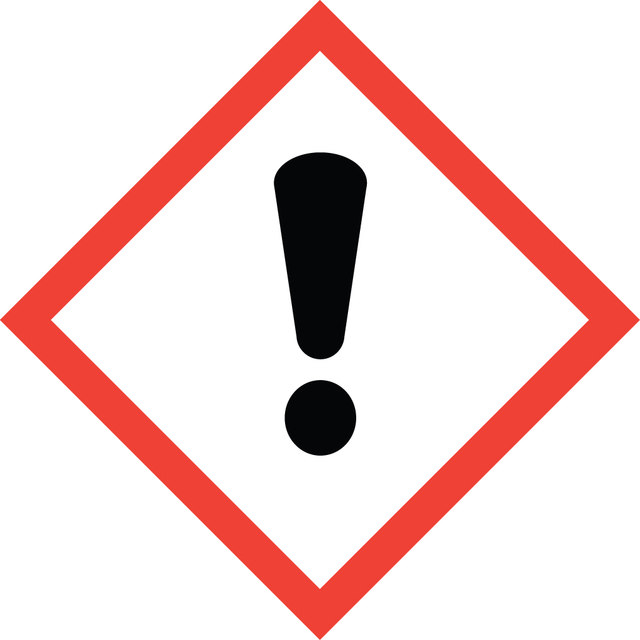

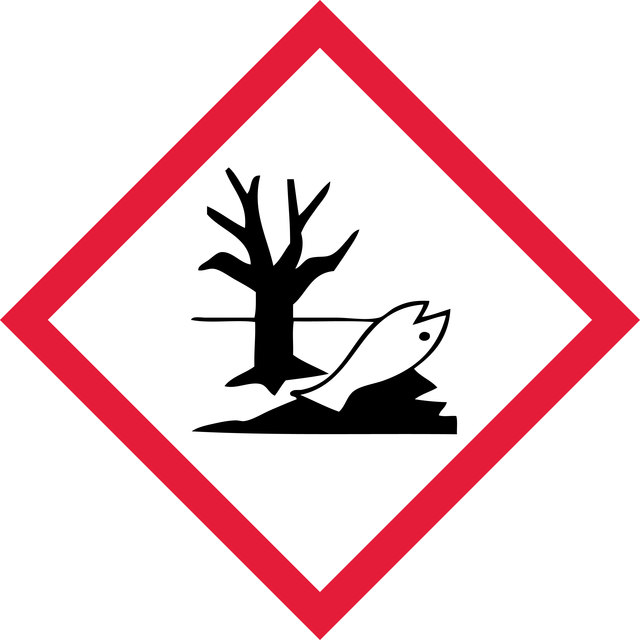
pictograms

Exclamation markEnvironment

signalword

Warning

Hazard Classifications

Aquatic Acute 1 - Aquatic Chronic 1 - Eye Irrit. 2 - Skin Irrit. 2

Storage Class

11 - Combustible Solids

wgk

WGK 2

flash_point_f

Not applicable

flash_point_c

Not applicable

ppe

dust mask type N95 (US), Eyeshields, Gloves


Choose from one of the most recent versions:

Certificates of Analysis (COA)

Lot/Batch Number

Don't see the Right Version?

If you require a particular version, you can look up a specific certificate by the Lot or Batch number.

Already Own This Product?

Find documentation for the products that you have recently purchased in the Document Library.

Visit the Document Library


Articles

Fatty acid synthesis supports cancer cell proliferation, essential for membrane generation, protein modification, and bioenergetics.


Kathleen Dittmann et al.
Antimicrobial resistance and infection control, 8, 122-122 (2019-08-02)
Recent publications have raised concerns of reduced susceptibilities of clinical bacterial isolates towards biocides. This study presents a comparative investigation of the susceptibility of livestock-associated Methicillin-resistant Staphylococcus aureus (LA-MRSA), hospital-acquired MRSA (HA-MRSA) and community-aquired MRSA (CA-MRSA) to the commonly used
Cale T Anger et al.
Environmental science & technology, 47(4), 1833-1843 (2013-01-17)
When discharged into surface waters via wastewater effluents, triclosan, the antimicrobial agent in handsoaps, and chlorinated triclosan derivatives (CTDs, formed during disinfection with chlorine) react photochemically to form polychlorinated dibenzo-p-dioxins. To evaluate the historical exposure of waters to these compounds
Joseph V Rodricks et al.
Critical reviews in toxicology, 40(5), 422-484 (2010-04-10)
Triclosan (2,4,4'-trichloro-2'-hydroxy-diphenyl ether) is an antibacterial compound that has been used in consumer products for about 40 years. The tolerability and safety of triclosan has been evaluated in human volunteers with little indication of toxicity or sensitization. Although information in


Global Trade Item Number

SKUGTIN
72779-25G-F04061835541744
72779-5G-F04061832862446