Skip to Content
Merck
CN

B4388

2-Bromo-2-chloro-1,1,1-trifluoroethane

≥99%, Inhalation anesthetic, liquid

Synonym(s):

Halothane

Sign In to View Organizational & Contract Pricing.

Select a Size

Change View

About This Item

Linear Formula:
BrCH(Cl)CF3
CAS Number:
Molecular Weight:
197.38
NACRES:
NA.77
PubChem Substance ID:
UNSPSC Code:
12352202
EC Number:
205-796-5
MDL number:
Beilstein/REAXYS Number:
1736947
Assay:
≥99%
Form:
liquid
Technical Service
Need help? Our team of experienced scientists is here for you.
Let Us Assist


Product Name

2-Bromo-2-chloro-1,1,1-trifluoroethane, ≥99%

vapor pressure

4.5 psi ( 20 °C)

Quality Level

assay

≥99%

form

liquid

contains

0.01% thymol as stabilizer

refractive index

n20/D 1.369 (lit.)

bp

50.2 °C (lit.)

density

1.872 g/mL at 25 °C (lit.)

SMILES string

FC(F)(F)C(Cl)Br

InChI

1S/C2HBrClF3/c3-1(4)2(5,6)7/h1H

InChI key

BCQZXOMGPXTTIC-UHFFFAOYSA-N

Application

2-Bromo-2-chloro-1,1,1-trifluoroethane, or halothane, has been used in a study that combined molecular simulations with free energy simulations to study solvation of halothane in polarizable water and methanol. Halothane has also been used in a study to investigate the interaction of anesthetics with the Rho GTPase regulator Rho GDP dissociation inhibitor.

Biochem/physiol Actions

2-Bromo-2-chloro-1,1,1-trifluoroethane is an inhalation anesthetic. In an effect believed to be independent of anesthesia, halothane inhibits the synthesis of 5-hydroxytryptamine in brain tissue, probably at the tryptophan hydroxylase step.
Inhalation anesthetic.


signalword

Danger

Hazard Classifications

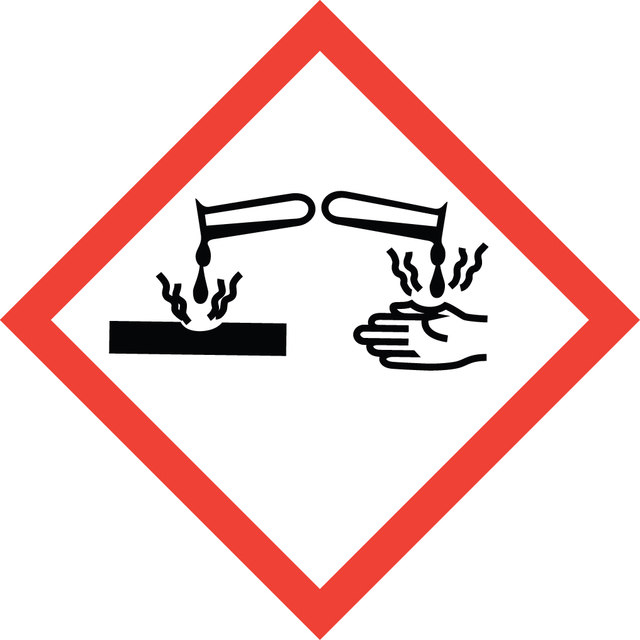
Eye Dam. 1 - Repr. 1B - Skin Irrit. 2 - STOT SE 3

target_organs

Respiratory system

Storage Class

6.1C - Combustible acute toxic Cat.3 / toxic compounds or compounds which causing chronic effects

wgk

WGK 3

flash_point_f

Not applicable

flash_point_c

Not applicable

ppe

Eyeshields, Gloves


Choose from one of the most recent versions:

Certificates of Analysis (COA)

Lot/Batch Number

Don't see the Right Version?

If you require a particular version, you can look up a specific certificate by the Lot or Batch number.

Already Own This Product?

Find documentation for the products that you have recently purchased in the Document Library.

Visit the Document Library


G I Elmer et al.
Behavioural brain research, 359, 950-957 (2018-06-23)
A growing body of clinical and preclinical research suggests that structural and functional changes in the habenula, a component of the epithalamus, are associated with major depressive disorder. A major excitatory, efferent projection from the habenula targets the rostromedial tegmentum
Mala Chakraborty et al.
Hepatology (Baltimore, Md.), 62(2), 546-557 (2015-02-26)
Clinical evidence suggests that many cases of serious idiosyncratic drug-induced liver injury are mediated by the adaptive immune system in response to hepatic drug-protein adducts, also referred to as "drug-induced allergic hepatitis"; but detailed mechanistic proof has remained elusive due
Samina Salim et al.
Behavioural brain research, 208(2), 545-552 (2010-01-13)
Recent work has suggested correlation of oxidative stress with anxiety-like behavior. There also is evidence for anxiolytic effects of physical exercise. However, a direct role of oxidative stress in anxiety is not clear and a protective role of physical exercise


Global Trade Item Number

SKUGTIN
B4388-125ML04061833429631
B4388-250ML04061833429648