
C30

Catalase from bovine liver
aqueous suspension, 10,000-40,000 units/mg protein
Synonym(s):
Bovine hepatocatalase, H2O2:H2O2 oxidoreductase
Sign In to View Organizational & Contract Pricing.
Select a Size
Change View
About This Item
CAS Number:
UNSPSC Code:
12352204
eCl@ss:
32160410
NACRES:
NA.54
MDL number:
Specific activity:
10,000-40,000 units/mg protein
Biological source:
bovine liver
Concentration:
20-50 mg/mL
biological source
bovine liver
Quality Level
form
aqueous suspension
specific activity
10,000-40,000 units/mg protein
mol wt
tetramer ~250 kDa
concentration
20-50 mg/mL
technique(s)
GC/MS: suitable
isoelectric point
5.4
UniProt accession no.
shipped in
wet ice
storage temp.
2-8°C
SMILES string
O(CC)C(=O)c1ccc(cc1)O
InChI
1S/C9H10O3/c1-2-12-9(11)7-3-5-8(10)6-4-7/h3-6,10H,2H2,1H3
InChI key
NUVBSKCKDOMJSU-UHFFFAOYSA-N
Gene Information
cow ... CAT(280743)
General description
Catalase from bovine liver contains 506 residues. It is a tetramer and each monomer corresponds to a molecular weight of 61 kDa. The active site in each momomer comprises nicotinamide adenine dinucleotide phosphate (NADPH) and iron binding region.
Research area: Cell Signaling
Research area: Cell Signaling
Research Area: Cell Signaling
Catalase from bovine liver is a tetramer consisting of 4 equal subunits each with a 60 kDa molecular weight. Each of these subunits contains iron bound to a protoheme IX group. The enzyme will also strongly bind to NADP, where NADP and the heme group are within 13.7 angstroms.
Catalase from bovine liver is a tetramer consisting of 4 equal subunits each with a 60 kDa molecular weight. Each of these subunits contains iron bound to a protoheme IX group. The enzyme will also strongly bind to NADP, where NADP and the heme group are within 13.7 angstroms.
Application
Catalase from bovine liver has been used for measuring the hydrogen peroxide content in cancer tissue homogenates. It has also been used to test the effect of organophosphate insecticide chlorpyrifos-ethyl (CE) [0,0-diethyl 0 (3,5,6-trichloro-2-pyridyl) phosphorothioate] on its enzyme activity.
Catalase acts as a natural antioxidant to study the roles of reactive oxygen species in gene expression and apoptosis. It has also been used to protect against oxidative damage to proteins, lipids, and nucleic acids. Industrially, catalzes have been used to remove hydrogen peroxide added to milk and cheese, in textile bleaching, and to examine its positive effects on the viability of DNA-repair mutants of E. coli.
Catalase from bovine liver may be used:
Catalase from bovine liver may be used:
- to prepare H2O2-O2 based biocathode for applications in glucose biofuel cells
- to study the kinetic properties and storage stability of catalase immobilized on to florisil
- in glutathione-mediated superoxide generation in an aqueous solution
Catalase from bovine liver is used for the following applications:
- Dielectrophoretic field-flow fractionation (DEP-FFF): It is a chromatographic method in which cell elution times reflect the positions of cells in a hydrodynamic flow profile under the control of sedimentation, DEP and hydrodynamic lift forces, FSED, FDEP and FHDL, respectively. The DEP-FFF buffer consists of catalase along with other ingrediants.
- GC-MS analyses.
- Deionization.
- GC-FID analysis.5
- Functional analysis of blood vessel.
Biochem/physiol Actions
Catalase, an antioxidant enzyme found in all aerobic organisms, catalyzes the degradation of hydrogen peroxide, a byproduct of metabolic processes, into less harmful water and oxygen. It can also react with alkylhydrogen peroxides, such as methylperoxide and ethylperoxide and the second H2O2 molecule can be replaced by methanol, ethanol, propanol, formate and nitrate as a hydrogen donor. Catalase enzyme uses either iron (Fe) or manganese (Mn) as cofactor, and are classified as Fe-CAT or Mn-CAT.
This product doesn′t need any activators, but it is inhibited by 3-amino-1-H-1,2,4 triazole, cyanide, azide, hydroxylamine, cyanogens bromide, 2-mercaptoethanol, dithiothreitol, dianisidnie and nitrate.
Preparation Note
This product is a crystalline suspension in water containing 0.1% thymol with activity of 10,000-40,000 units/mg.
Tightly closed. Dry. Keep locked up or in an area accessible only to qualified or authorized
persons
persons
Other Notes
One unit will decompose 1.0 μmole of H2O2 per min at pH 7.0 at 25 °C, while the H2O2 concentration falls from 10.3 to 9.2 mM, measured by the rate of decrease of A240.
Disclaimer
Solutions of catalse should not be frozen. Frozen solution will result in a 50-70% loss of activity.
Still not finding the right product?
Explore all of our products under Catalase from bovine liver
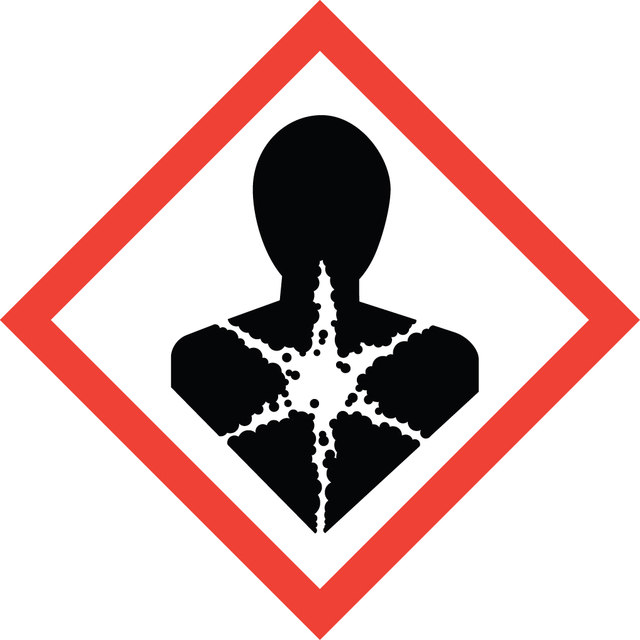
signalword
Danger
hcodes
pcodes
Hazard Classifications
Resp. Sens. 1
Storage Class
13 - Non Combustible Solids
wgk
WGK 1
flash_point_f
Not applicable
flash_point_c
Not applicable
ppe
Eyeshields, Gloves, multi-purpose combination respirator cartridge (US), type N95 (US)
Regulatory Information
低风险生物材料
动植物源性产品
This item has
Choose from one of the most recent versions:
Already Own This Product?
Find documentation for the products that you have recently purchased in the Document Library.
Related Content
Manganese superoxide dismutase (SOD2/MnSOD)/catalase and SOD2/GPx1 ratios as biomarkers for tumor progression and metastasis in prostate, colon, and lung cancer
Miar A, et al.
Free Radical Biology & Medicine, 85, 45-55 (2015)
Peter R C Gascoyne et al.
Electrophoresis, 34(7), 1042-1050 (2012-11-23)
Although dielectrophoresis (DEP) has great potential for addressing clinical cell isolation problems based on cell dielectric differences, a biological basis for predicting the DEP behavior of cells has been lacking. Here, the dielectric properties of the NCI-60 panel of tumor
Sangjo Shim et al.
Biomicrofluidics, 7(1), 11807-11807 (2014-01-10)
Circulating tumor cells (CTCs) are prognostic markers for the recurrence of cancer and may carry molecular information relevant to cancer diagnosis. Dielectrophoresis (DEP) has been proposed as a molecular marker-independent approach for isolating CTCs from blood and has been shown
Global Trade Item Number
| SKU | GTIN |
|---|---|
| 49451-U | 04061837619304 |
| 577140-U | 04065265824255 |
| 577141-U | 04065269130505 |
| C30-100MG | 04061833484982 |
| C30-1G | 04061826303849 |
| C30-500MG | 04061833484999 |