Skip to Content
Merck
CN

K0133

Kaempferol

≥90% (HPLC), powder

Synonym(s):

3,4′,5,7-Tetrahydroxyflavone, 3,5,7-Trihydroxy-2-(4-hydroxyphenyl)-4H-1-benzopyran-4-one, Robigenin

Sign In to View Organizational & Contract Pricing.

Select a Size

Change View

About This Item

Empirical Formula (Hill Notation):
C15H10O6
CAS Number:
Molecular Weight:
286.24
UNSPSC Code:
12191503
NACRES:
NA.25
PubChem Substance ID:
MDL number:
Beilstein/REAXYS Number:
304401
Technical Service
Need help? Our team of experienced scientists is here for you.
Let Us Assist


biological source

synthetic

Quality Level

assay

≥90% (HPLC)

form

powder

storage condition

protect from light

color

yellow

mp

277 °C

solubility

ethanol: 20 mg/mL, DMSO: 50 mg/mL

storage temp.

room temp

SMILES string

Oc1ccc(cc1)C2=C(O)C(=O)c3c(O)cc(O)cc3O2

InChI

1S/C15H10O6/c16-8-3-1-7(2-4-8)15-14(20)13(19)12-10(18)5-9(17)6-11(12)21-15/h1-6,16-18,20H

InChI key

IYRMWMYZSQPJKC-UHFFFAOYSA-N

General description

Kaempferol is a natural dietary flavonoid and a polyphenol antioxidant found in various fruits and vegetables. Kaempferol is present in plants in a different glycosidic form such as astragalin by binding with different sugars.

Application

Kaempferol (KAE) has been used:
  • to check its potential effect as an antioxidant and neuroprotective agent against rotenone-induced Parkinson′s disease (PD) model in SH-S5Y5 cells
  • to test its anti-inflammatory effect on lipopolysaccharide (LPS)-induced inflammatory injury in human aortic endothelial cells (HAECs)
  • to study its apoptosis sensitizing effect on non-small cell lung cancer (NSCLC) cells by inhibiting nuclear factor erythroid 2-related factor 2 (Nrf2)

Chromogenic reagent for antimony in the low ppm range and for gallium and indium in the sub-ppm range.

Biochem/physiol Actions

Potent inhibitor of osteoclastic bone resorption. The effect is believed to be attributable to both the antioxidant and estrogenic activities of kaempferol.
The diphenylpropane component of Kaempferol contributes to its hydrophobic properties. It has shown to revert the transformed phenotype of phorbol ester-treated mouse fibroblasts or v-H-ras-transformed NIH 3T3 cells. Kaempferol induces significant nuclear DNA degradation concurrent with lipid peroxidation. It also inhibits topoisomerase I catalyzed DNA religation. Kaempferol may also inhibit the activity of fatty acid synthase.

Packaging

Bottomless glass bottle. Contents are inside inserted fused cone.


Still not finding the right product?

Explore all of our products under Kaempferol


signalword

Warning

Storage Class

11 - Combustible Solids

flash_point_f

Not applicable

flash_point_c

Not applicable

ppe

Eyeshields, Faceshields, Gloves, type P2 (EN 143) respirator cartridges
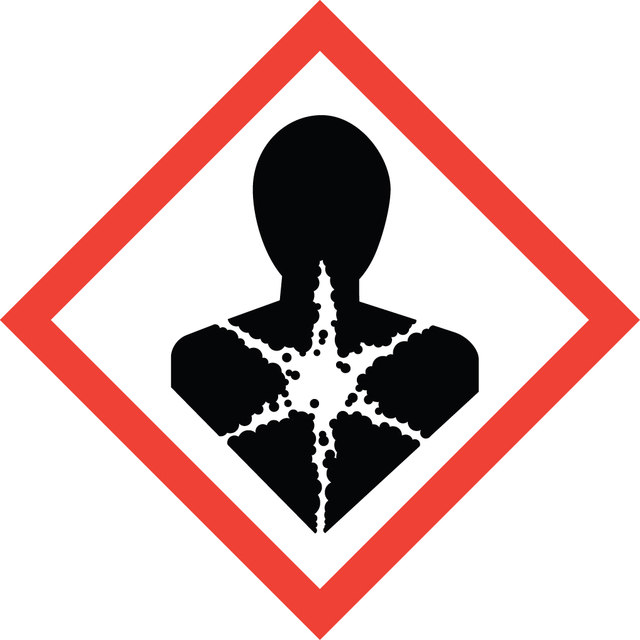
pictograms

Health hazardExclamation mark

Hazard Classifications

Eye Irrit. 2 - Muta. 2 - Skin Irrit. 2


Choose from one of the most recent versions:

Certificates of Analysis (COA)

Lot/Batch Number

Don't see the Right Version?

If you require a particular version, you can look up a specific certificate by the Lot or Batch number.

Already Own This Product?

Find documentation for the products that you have recently purchased in the Document Library.

Visit the Document Library


Articles

抗氧化剂可保护生物系统免受含氧自由基和氧化还原过渡金属离子(如铁、铜和镉)引起的氧化损伤。

Antioxidants protect biological systems from oxidative damage produced by oxygen-containing free radicals and from redoxactive transition metal ions such as iron, copper, and cadmium.

Fatty acid synthesis supports cancer cell proliferation, essential for membrane generation, protein modification, and bioenergetics.

Related Content


F Boege et al.
The Journal of biological chemistry, 271(4), 2262-2270 (1996-01-26)
Topoisomerases are involved in many aspects of DNA metabolism such as replication and transcription reactions. Camptothecins, which stabilize the covalent intermediate of topoisomerase I and DNA are effective, though toxic, drugs for cancer therapy. In this study, a new class
M L Kuo et al.
Cancer letters, 87(1), 91-97 (1994-11-25)
Fifteen flavonoids were employed to examine their effects on the morphological changes, foci formation in soft agar and cellular growth in v-H-ras-transformed NIH3T3 cells. The data presented here demonstrated that only three specific flavonoids--apigenin, kaempferol, and genistein--exhibited the reverting effect
S C Sahu et al.
Cancer letters, 85(2), 159-164 (1994-10-14)
The extent of DNA damage and lipid peroxidation induced by kaempferol, a polyphenolic flavonoid with a molecular structure similar to quercetin, was studied under aerobic conditions in isolated rat-liver nuclei. Kaempferol induced significant (P < 0.05) concentration-dependent nuclear DNA degradation


Global Trade Item Number

SKUGTIN
K0133-100MG04061833867730
K0133-10MG04061835326907
K0133-500MG04061833867747
K0133-50MG04061833867754