
Sign In to View Organizational & Contract Pricing.
Select a Size
Change View
About This Item
Empirical Formula (Hill Notation):
C13H9F3N2O2
CAS Number:
Molecular Weight:
282.22
NACRES:
NA.77
PubChem Substance ID:
UNSPSC Code:
12352106
EC Number:
224-516-2
MDL number:
Assay:
≥98% (HPLC)
Form:
powder
Product Name
Niflumic acid,
biological source
synthetic (organic)
assay
≥98% (HPLC)
form
powder
mp
203-204 °C
solubility
acetone: 50 mg/mL, clear to slightly hazy, yellow
SMILES string
O=C(O)C1=CC=CN=C1NC2=CC(C(F)(F)F)=CC=C2
InChI
1S/C13H9F3N2O2/c14-13(15,16)8-3-1-4-9(7-8)18-11-10(12(19)20)5-2-6-17-11/h1-7H,(H,17,18)(H,19,20)
InChI key
JZFPYUNJRRFVQU-UHFFFAOYSA-N
Gene Information
human ... PTGS1(5742)
Application
Niflumic acid has been used:
- as a chloride channel blocker in mouse olfactory epithelium for odor-induced electroolfactograms (EOGs) measurements, to test its analgesic effect on rat dorsal root ganglion neurons post γ-aminobutyric acid induction
- as a calcium-activated chloride channel (CaCC) inhibitor in C2C12 myoblasts and also to test its effect on volume-regulated anion channel (VRAC)
- as an inhibitor of voltage-dependent potassium channel in human embryonic kidney (HEK 293) phoenix cells
Biochem/physiol Actions
Niflumic acid (NFA), a γ-aminobutyric acid type A receptor (GABAARs) antagonist is a non-steroidal anti-inflammatory drug (NSAID) and it belongs to the fenamate class. It is also a blocker of chloride ion channel and a calcium-activated chloride channel (CaCC) inhibitor. NFA possesses anti-inflammatory property and is useful in treating rheumatic disorders. It is also an inhibitor of N-methyl-D-aspartate receptor and glycine receptor. NFA also inhibits enzymes associated with the prostaglandins synthesis.
Selective cyclooxygenase-2 (COX-2) inhibitor.
Features and Benefits
This compound is featured on the Chloride Channels and Potassium Channels pages of the Handbook of Receptor Classification and Signal Transduction. To browse other handbook pages, click here.
Still not finding the right product?
Explore all of our products under Niflumic acid
signalword
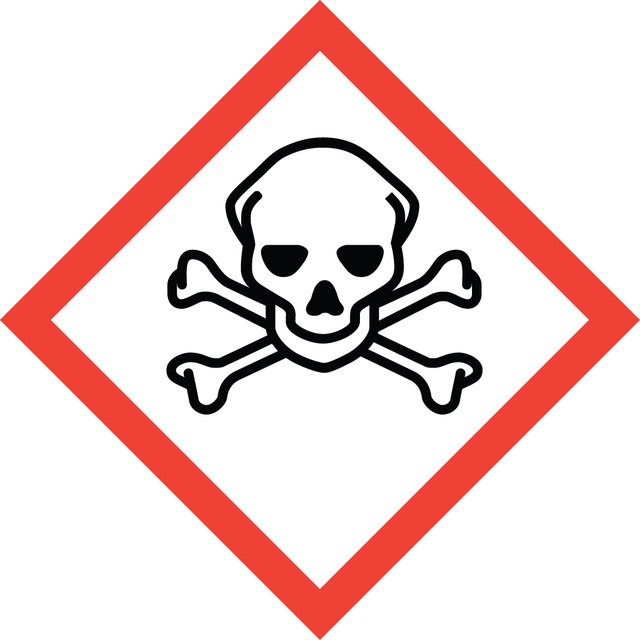
Danger
hcodes
Hazard Classifications
Acute Tox. 3 Oral - Aquatic Chronic 4
Storage Class
6.1C - Combustible acute toxic Cat.3 / toxic compounds or compounds which causing chronic effects
wgk
WGK 3
ppe
dust mask type N95 (US), Eyeshields, Faceshields, Gloves
Choose from one of the most recent versions:
Already Own This Product?
Find documentation for the products that you have recently purchased in the Document Library.
Nicholas Baniak et al.
American journal of physiology. Lung cellular and molecular physiology, 303(4), L327-L333 (2012-06-12)
The airway is kept sterile by an efficient innate defense mechanism. The cornerstone of airway defense is mucus containing diverse antimicrobial factors that kill or inactivate pathogens. Most of the mucus in the upper airways is secreted by airway submucosal
Lingye Chen et al.
The Journal of biological chemistry, 294(39), 14279-14288 (2019-08-08)
Skeletal muscle myoblast differentiation involves elaborate signaling networks, including the activity of various ion channels and transporters. Several K+ and Ca2+ channels have been shown to affect myogenesis, but little is known about roles of Cl- channels in the associated
Michele Dibattista et al.
The Journal of general physiology, 140(1), 3-15 (2012-06-27)
The rodent vomeronasal organ plays a crucial role in several social behaviors. Detection of pheromones or other emitted signaling molecules occurs in the dendritic microvilli of vomeronasal sensory neurons, where the binding of molecules to vomeronasal receptors leads to the
Global Trade Item Number
| SKU | GTIN |
|---|---|
| N0630-10G | 04061834092933 |
| N0630-25G | 04061834092940 |