
919977

Lithium bis(trifluoromethanesulfonyl)imide

99.99% trace metals basis
Synonym(s):
Bis(trifluoromethane)sulfonimide lithium salt, LiNTf2, LiTFSI, LiTf2N, Bis(trifluoromethylsulfonyl)amine lithium salt, Lithium bistrifluoromethanesulfonimidate
Select a Size
About This Item
Quality Level
assay
99.99% trace metals basis
reaction suitability
core: lithium
greener alternative product characteristics
Design for Energy Efficiency
Learn more about the Principles of Green Chemistry.
sustainability
Greener Alternative Product
mp
234-238 °C (lit.)
application(s)
battery precursors
catalysts
material synthesis precursor
greener alternative category
SMILES string
[Li]N(S(=O)(=O)C(F)(F)F)S(=O)(=O)C(F)(F)F
InChI
1S/C2F6NO4S2.Li/c3-1(4,5)14(10,11)9-15(12,13)2(6,7)8;/q-1;+1
InChI key
QSZMZKBZAYQGRS-UHFFFAOYSA-N
General description
- High electrochemical stability
- High lithium-ion conductivity
- Thermal stability
- Hydrophilic nature
Application
- An additive in the development of dual-functional separator coating materials. These materials are based on covalent organic frameworks (COFs) and are specifically designed for use in high-performance lithium-selenium sulfide batteries. The Li-SeS2 battery achieved outstanding performance in terms of energy storage and stability. It exhibited a specific capacity of 844.6 mA h g-1 at 0.5C and a SeS2 loading of 2 mg cm-2.
- As an additive in the electrolyte formulation along with polyethylene oxide for the development of solid-state lithium batteries. LiTFSI enhance the ionic conductivity of the PEO-based electrolyte, which is essential for the efficient transport of lithium ions.
- As a key component in the development of a PEO/LiTFSI-coated polypropylene membrane. This membrane is designed for high-loading lithium–sulfur batteries to enhance battery performance, improve capacity, and extend cycle life.
- As a component in the electrolyte system along with TEMPOL derivatives. The incorporation of LiTFSI in the electrolyte system enhances the stability and achieves an efficiency of 6.16% in solid-state fiber dye-sensitized solar cells.
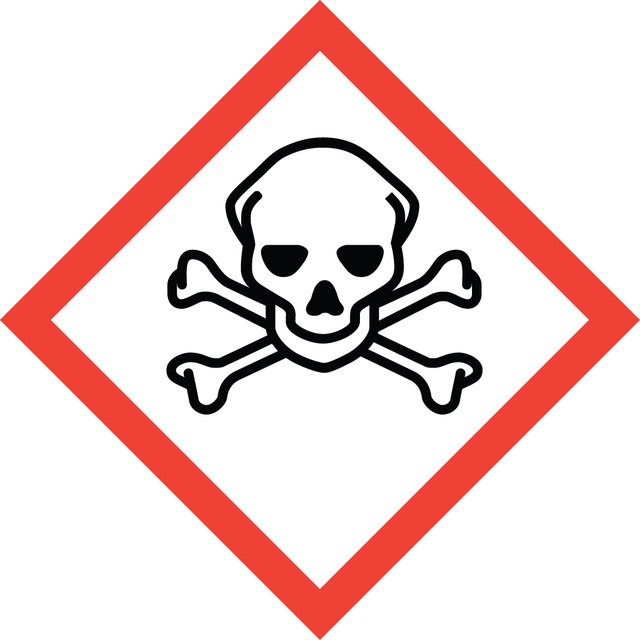


signalword
Danger
Hazard Classifications
Acute Tox. 3 Dermal - Acute Tox. 3 Oral - Aquatic Chronic 3 - Eye Dam. 1 - Skin Corr. 1B - STOT RE 2 Oral
target_organs
Nervous system
Storage Class
6.1A - Combustible acute toxic Cat. 1 and 2 / very toxic hazardous materials
wgk
WGK 3
flash_point_f
Not applicable
flash_point_c
Not applicable
Choose from one of the most recent versions:
Already Own This Product?
Find documentation for the products that you have recently purchased in the Document Library.
Global Trade Item Number
| SKU | GTIN |
|---|---|
| 919977-10G | 04065265652377 |
| 919977-50G | 04065265652384 |