Skip to Content
Merck
CN

01696

Acrylamide

for Northern and Southern blotting, powder blend

Synonym(s):

2-Propenamide, Polyacrylamide, acrylic amide, akrylamid, Acrylic acid amide

Sign In to View Organizational & Contract Pricing.

Select a Size

Change View

About This Item

Linear Formula:
CH2=CHCONH2
CAS Number:
Molecular Weight:
71.08
NACRES:
NA.25
PubChem Substance ID:
eCl@ss:
39031205
UNSPSC Code:
41105319
EC Number:
201-173-7
MDL number:
Beilstein/REAXYS Number:
605349
Technical Service
Need help? Our team of experienced scientists is here for you.
Let Us Assist


grade

Molecular Biology

Quality Level

vapor density

2.45 (vs air)

vapor pressure

0.03 mmHg ( 40 °C)

product line

BioReagent

assay

≥99.5% (GC)

form

powder blend

technique(s)

electrophoresis: suitable

impurities

DNases, none detected, RNases, none detected, phosphatases, none detected, proteases, none detected

bp

125 °C/25 mmHg (lit.)

mp

82-86 °C (lit.)

solubility

H2O: 0.25 g/mL at 20 °C, clear, colorless

storage temp.

2-8°C

SMILES string

NC(=O)C=C

InChI

1S/C3H5NO/c1-2-3(4)5/h2H,1H2,(H2,4,5)

InChI key

HRPVXLWXLXDGHG-UHFFFAOYSA-N

General description

Acrylamide powder is a white, odorless, crystalline solid. It is commonly used in molecular biology labs as a cross linking agent to cast polyacrylamide gels for nucleic acid electrophoresis.

Application

Suitable for making polyacrylamide gels according to established recipes.

Disclaimer

Acrylamide powder is highly toxic through inhalation and skin contact. Acrylamide is considered to be a probable carciongen in humans. Standard laboratory nitrile gloves and full sleeve lab coats should be worn when handling acrylamide in any form. Dust masks or working in a fume hood is advised when handling acrylamide powder.


Still not finding the right product?

Explore all of our products under Acrylamide
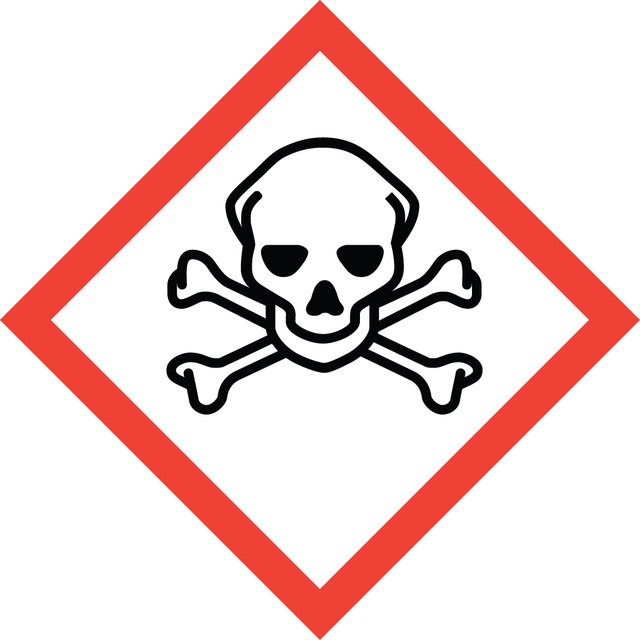

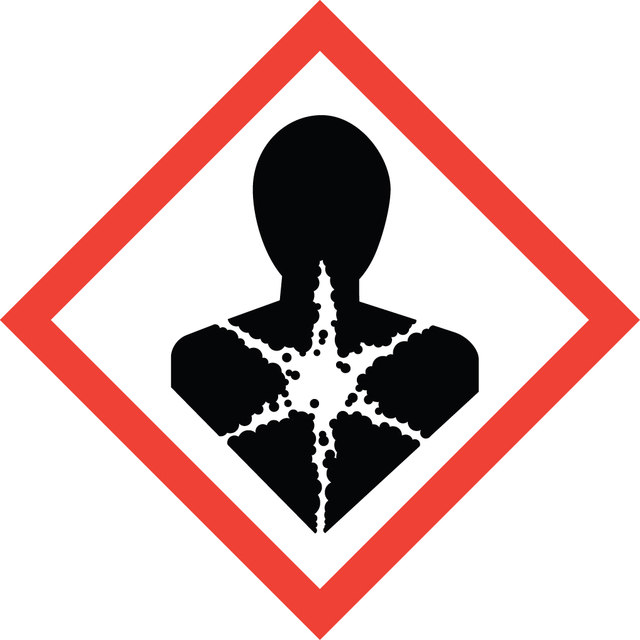
pictograms

Skull and crossbonesHealth hazard

signalword

Danger

Hazard Classifications

Acute Tox. 3 Oral - Acute Tox. 4 Dermal - Acute Tox. 4 Inhalation - Carc. 1B - Eye Irrit. 2 - Muta. 1B - Repr. 2 - Skin Irrit. 2 - Skin Sens. 1 - STOT RE 1 Oral

target_organs

Peripheral nervous system

Storage Class

6.1C - Combustible acute toxic Cat.3 / toxic compounds or compounds which causing chronic effects

wgk

WGK 3

flash_point_f

280.4 °F - closed cup

flash_point_c

138 °C - closed cup

ppe

Eyeshields, Faceshields, Gloves, type P3 (EN 143) respirator cartridges

Regulatory Information

危险化学品

This item has


Choose from one of the most recent versions:

Certificates of Analysis (COA)

Lot/Batch Number

Don't see the Right Version?

If you require a particular version, you can look up a specific certificate by the Lot or Batch number.

Already Own This Product?

Find documentation for the products that you have recently purchased in the Document Library.

Visit the Document Library


Protocols

Northern和Southern印迹简介:两种将大分子转移到膜支持物的常用方法。该文章还提供了Northern印迹和Southern印迹的实验方案。

Learn Northern and Southern blotting basics, with protocols and applications for macromolecule transfer to membrane supports.


R.C. Ogden et al.
Methods in Enzymology, 152, 66-66 (1987)
Jonas S Laursen et al.
Journal of the American Chemical Society, 135(7), 2835-2844 (2013-01-25)
Non-natural peptide analogs have significant potential for the development of new materials and pharmacologically active ligands. One such architecture, the β-peptoids (N-alkyl-β-alanines), has found use in a variety of biologically active compounds but has been sparsely studied with respect to
Janneke G F Hogervorst et al.
Critical reviews in toxicology, 40(6), 485-512 (2010-02-23)
Since 2002, it is known that the probable human carcinogen acrylamide is present in commonly consumed carbohydrate-rich foods, such as French fries and potato chips. In this review, the authors discuss the body of evidence on acrylamide carcinogenicity from both


Global Trade Item Number

SKUGTIN
163368-100G04061832489315
163368-25G04061832489322
163368-5G04061838747570
01696-1KG04061838609601
01696-100G04061838609595
01696-500G04061838609618