
360457

Acetonitrile
≥99.5%, ACS reagent
Synonym(s):
Methyl cyanide, Anhydrous ACN, Dry MeCN
Sign In to View Organizational & Contract Pricing.
Select a Size
Change View
About This Item
Linear Formula:
CH3CN
CAS Number:
Molecular Weight:
41.05
NACRES:
NA.21
PubChem Substance ID:
eCl@ss:
39031501
UNSPSC Code:
12191502
EC Number:
200-835-2
MDL number:
Beilstein/REAXYS Number:
741857
Assay:
≥99.5%
Grade:
ACS reagent
Bp:
81-82 °C (lit.)
Vapor pressure:
72.8 mmHg ( 20 °C)
Product Name
Acetonitrile, ACS reagent, ≥99.5%
grade
ACS reagent
Quality Level
vapor density
1.41 (vs air)
vapor pressure
72.8 mmHg ( 20 °C)
assay
≥99.5%
form
liquid
autoignition temp.
973 °F
expl. lim.
16 %
dilution
(for analytical testing)
impurities
≤0.3% water, ≤0.6 μeq/g Titr. base, ≤8 μeq/g Titr. acid
evapn. residue
≤0.005%
color
APHA: ≤10
refractive index
n20/D 1.344 (lit.)
bp
81-82 °C (lit.)
mp
−45 °C (lit.)
density
0.786 g/mL at 25 °C (lit.)
format
neat
SMILES string
CC#N
InChI
1S/C2H3N/c1-2-3/h1H3
InChI key
WEVYAHXRMPXWCK-UHFFFAOYSA-N
General description
Acetonitrile (MeCN, ACN) is an aliphatic nitrile that is commonly used as a reaction solvent as well as a chemical intermediate in organic synthesis. In many chromatographic techniques, MeCN is used as a mobile phase solvent due to its low viscosity, high elution strength, and miscibility in water.
Our premium ACS solvents are ideal for routine chemical synthesis, drying, purification, and critical labware cleaning. They meet or exceed the rigorous standards of the American Chemical Society (ACS), ensuring high-quality results for your research needs.
Premium ACS Solvents: Our solvents meet or exceed the stringent standards set by the American Chemical Society, ensuring high quality and reliability for your laboratory applications.
Replicable and Publishable Results: Designed for consistency, our solvents deliver results that can be reliably reproduced, making them ideal for research that requires publication.
Versatile Applications: Suitable for routine chemical synthesis, drying, purification, and critical labware cleaning, our solvents cater to a wide range of research needs in the laboratory.
Premium ACS Solvents: Our solvents meet or exceed the stringent standards set by the American Chemical Society, ensuring high quality and reliability for your laboratory applications.
Replicable and Publishable Results: Designed for consistency, our solvents deliver results that can be reliably reproduced, making them ideal for research that requires publication.
Versatile Applications: Suitable for routine chemical synthesis, drying, purification, and critical labware cleaning, our solvents cater to a wide range of research needs in the laboratory.
Application
Acetonitrile can be used as a solvent in:
- The solid-phase peptide synthesis.
- The sialylation reactions.
- The synthesis of copper nanoparticles by reduction of copper nitrate salt using NaBH4. During the preparation, ACN acts as a protecting solvent, which prevents the oxidation of nanoparticles.
- The preparation of diaryl selenides by Cu-catalyzed coupling reaction between aryl iodides and diphenyl diselenide. In this process, ACN also functions as a ligand for the copper catalyst to increase its catalytic activity.
Features and Benefits
ACS solvents meet or exceed the high standards of the American Chemical Society (ACS) ,with test specifications that are specialized to every compound. According to the American Chemical Society, ACS reagent grade implies that it is a substance of sufficient purity to be used in most chemical analyses or reactions.
Still not finding the right product?
Explore all of our products under Acetonitrile
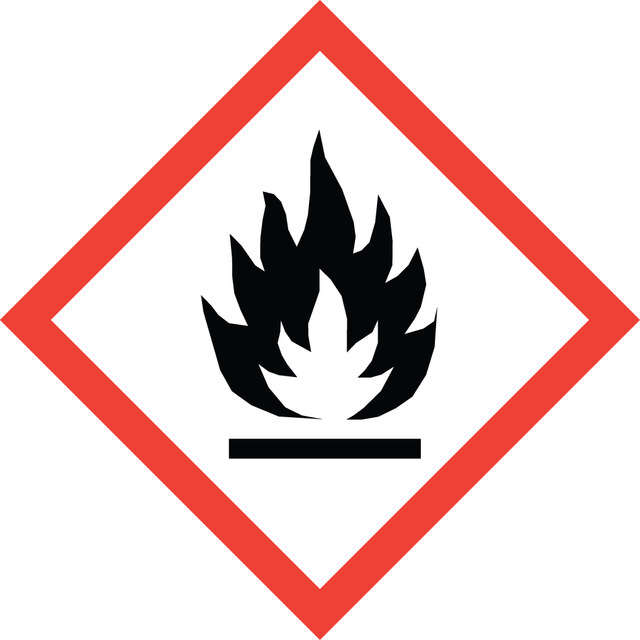

signalword
Danger
Hazard Classifications
Acute Tox. 4 Dermal - Acute Tox. 4 Inhalation - Acute Tox. 4 Oral - Eye Irrit. 2 - Flam. Liq. 2
Storage Class
3 - Flammable liquids
flash_point_f
35.6 °F - closed cup
flash_point_c
2.0 °C - closed cup
Regulatory Information
危险化学品
This item has
Choose from one of the most recent versions:
Already Own This Product?
Find documentation for the products that you have recently purchased in the Document Library.
Purification of acetonitrile.
Walter M and Ramaley L.
Analytical Chemistry, 45(1), 165-166 (1973)
Timo Glatter et al.
Molecular systems biology, 5, 237-237 (2009-01-22)
Protein complexes represent major functional units for the execution of biological processes. Systematic affinity purification coupled with mass spectrometry (AP-MS) yielded a wealth of information on the compendium of protein complexes expressed in Saccharomyces cerevisiae. However, global AP-MS analysis of
Elke H J Krekels et al.
Clinical pharmacokinetics, 53(6), 553-563 (2014-02-06)
From a previously validated paediatric population pharmacokinetic model, it was derived that non-linear morphine maintenance doses of 5 μg/kg(1.5)/h, with a 50 % dose reduction in neonates with a postnatal age (PNA) <10 days, yield similar morphine and metabolite concentrations
Global Trade Item Number
| SKU | GTIN |
|---|---|
| 360457-18L-CS | 04061837910999 |
| 360457-1L | 04061831817775 |
| 360457-2.5L | 04061831817782 |
| 360457-4L | 04061837565922 |
| 360457-500ML | 04061831817829 |
| 360457-200L | 04061838161567 |
| 360457-18L-P1-BK | 04061838691620 |
| 360457-190L | 04061836608514 |
| 360457-20L | 04061831817812 |
| 360457-4X4L | 04061837565939 |